
Starting a home health agency isn’t just about filling out forms. You’re dealing with state health departments, Medicare conditions of participation, and a stack of policies before you can admit your first patient. Here’s the order that tends to work.
1. Decide your structure and state
Most agencies are LLCs or corporations. Your state’s secretary of state site has the forms. While you’re at it, confirm which state(s) you’ll operate in,you’ll need a license in each. Rules differ a lot: some states want a physical office and a director of nursing before they’ll even look at your application; others have long waiting periods. Check the state health department’s “home health” or “home care” licensing page and note any pre-application meetings or orientations.
2. State license first
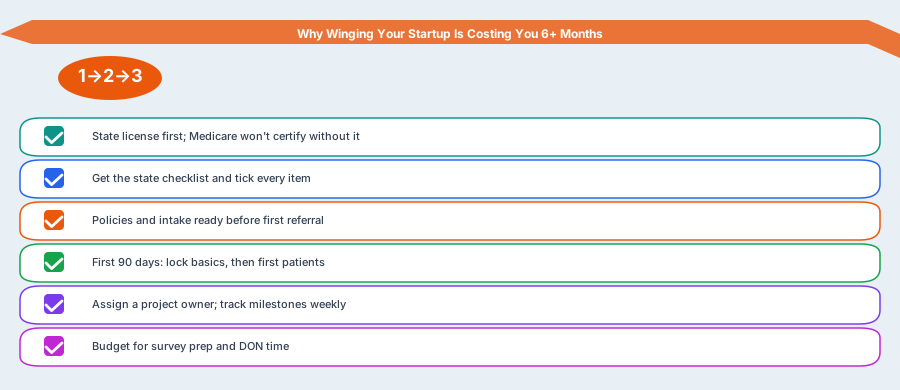
Medicare won’t certify you without a state license. So the sequence is: state license, then Medicare. The license application usually asks for ownership disclosure, proof of liability insurance, policies and procedures (often a list or templates), and sometimes a survey or site visit. Get the checklist from your state and tick items off one by one. Missing one item can set you back weeks.
3. Medicare certification
After you have the state license, you apply to CMS for Medicare approval. That means meeting the Conditions of Participation (CoP) and passing a survey. Most new agencies get a state survey that’s used for both state and Medicare. Prep for that by going through the CoP and your policies line by line. We have a separate guide on the Medicare certification process and a Medicare cert readiness checklist you can download. Use the button below to get it.
4. Policies, staff, and first referrals
You’ll need core policies (admission, discharge, infection control, emergency, etc.), a director of nursing and enough staff to cover visits, and a way to handle referrals and intake. Don’t wait until the last minute to set up your intake process,referral sources will send you packets whether or not you’re ready. A simple intake checklist that covers face-to-face, orders, and insurance verification will save you a lot of rework.
If you’re in the middle of this and something doesn’t match your state, double-check with your state health department or a local consultant. A few hours of clarity now can save months of back-and-forth. Managers who’ve opened agencies in more than one state keep a simple comparison of key differences (timeline, DON requirement, pre-application steps) so they don’t assume the last state’s rules apply.
We have a startup checklist you can download: the sequence (structure → license → Medicare → policies and first referrals), with space to note state-specific dates and contacts. Use the button below to get it.