
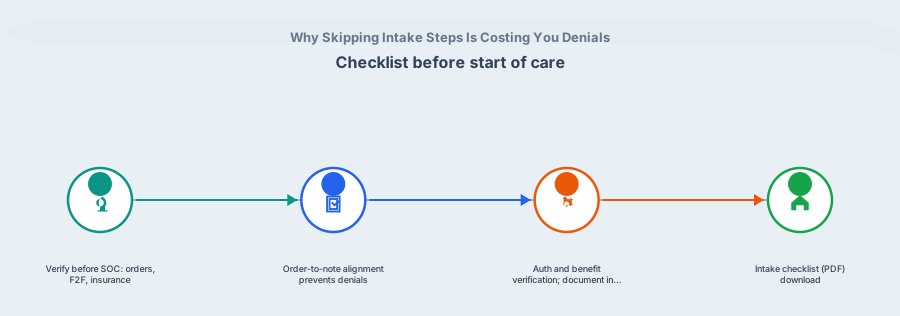
Intake is where referrals turn into patients,or into denials and delays. A checklist that matches what payers and surveyors expect will catch missing pieces before they cost you. Here’s what we use and why it works.
Four sections that cover the bases
We structure intake around four areas: Regulatory & Compliance, Insurance & Authorization, Care Coordination, and Demographics. Regulatory is where face-to-face encounter requirements and physician orders live,you need the right dates and the order-to-note match or you’ll get denied. Insurance & Authorization is eligibility, authorization, and any payer-specific requirements. Care Coordination is handoffs, referral source info, and who’s responsible for what. Demographics is patient and contact info, address, and visit address if it’s different.
Why order-to-note matters
Medicare and many payers expect the physician order to align with the face-to-face documentation and the plan of care. If the order says one thing and the note says another, or the dates don’t line up, you’re at risk for denials or audit findings. The checklist should force a quick check: do we have an order, do we have a face-to-face, and do they match? Doing that before you schedule the SOC visit saves a lot of rework.
Using the checklist day to day
Run through each section for every referral. Don’t mark a section complete until every item in it is done. If something’s missing, assign it and follow up before you start care. A lot of agencies keep this in a spreadsheet or in their EHR; the important part is that the same four sections and the same rules apply every time.
We’ve turned this into a PDF checklist you can print or share with your team. Same structure we use in our own workflow,Regulatory & Compliance, Insurance & Authorization, Care Coordination, Demographics. Use the button below to get it.