
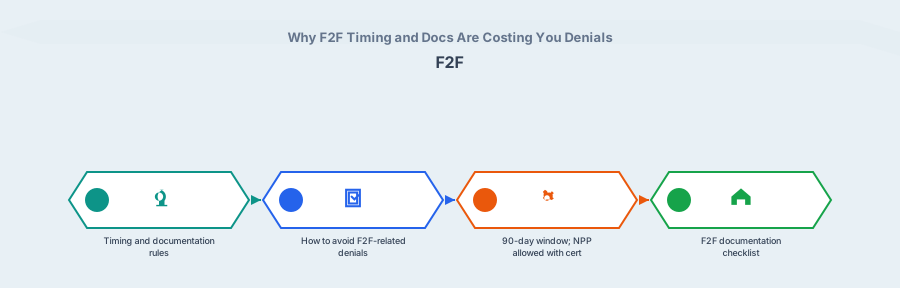
Medicare and most payers require a face-to-face encounter with the patient before (or sometimes shortly after) the start of home health care. The encounter has to be done by a physician or an allowed non-physician practitioner, and it has to be documented in a way that supports the need for home health. Get the timing or the documentation wrong and you’ll see denials,so before locking OASIS or billing, run a quick visit note QA that prevents denials.
Timing rules
For Medicare, the face-to-face must occur no more than 90 days before the start of care, or within 30 days after the SOC. If it’s within 30 days after, the physician has to document that a longer gap wasn’t practical. Your state and other payers may have slightly different windows,check your contracts and manuals. The key is to never schedule the SOC until you’ve confirmed the face-to-face date and that it falls in the allowed window.
What has to be in the documentation
The face-to-face document has to tie the patient’s condition to the need for home health services. It should reference the same diagnoses and clinical picture as the order. Surveyors and auditors look for consistency: does the order match the face-to-face, and does the face-to-face support the disciplines and frequency you’re billing? Vague notes or mismatched dates are red flags.
Avoiding denials
- Verify the face-to-face date before you admit. If it’s outside the window, get a new encounter or don’t start until you have one.
- Keep a copy of the face-to-face in the chart and make sure the ordering physician and date are clear.
- Before locking OASIS or submitting claims, do a quick check: order and face-to-face align on diagnosis and timing.
We have an F2F documentation checklist you can download. It covers timing, required elements, and a quick pre-submission check.