
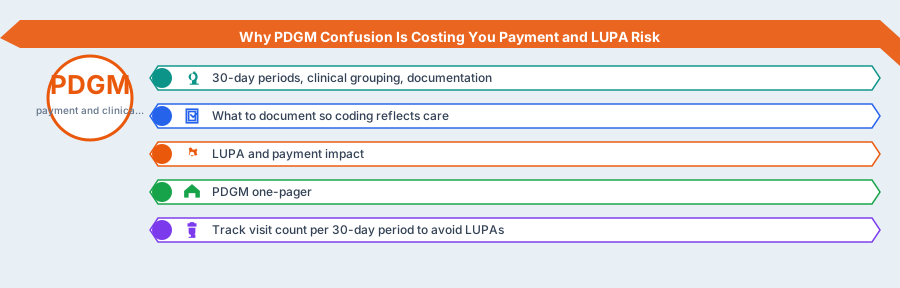
PDGM (Patient-Driven Groupings Model) is how Medicare pays for home health episodes. Payment is tied to clinical grouping, admission source, and timing,not just visit count. If you don’t document correctly, you get underpaid or audited. Experienced billing and clinical leads run a quick PDGM check before locking OASIS and submitting,it’s one of the highest-leverage moves for revenue integrity.
How PDGM home health payment works
Each episode is grouped into a category based on diagnosis, admission source (community vs institutional), and timing (early vs late). The grouping drives the payment amount. OASIS and the physician order feed the grouping; wrong or missing codes change the result. So documentation isn’t just “for the chart”,it directly affects what you’re paid. Clinical grouping can shift significantly if the primary diagnosis or comorbidity coding is off; admission source (e.g. community vs. institutional) and early vs. late episode also change the rate. One wrong M1020 or M0090 can move you into a lower-paying bucket.
PDGM documentation: what to get right
Make sure the primary diagnosis and other diagnoses on the order and OASIS align. Admission source has to be correct (where the patient was before referral,hospital, SNF, community). M0090 (SOC date) has to be set right. A quick OASIS QA before lock on these items catches a lot of grouping errors. Many agencies train clinicians and intake staff on the PDGM “big levers” so the right information is captured at SOC instead of fixed later.
Where managers focus
Run a report (if your EHR supports it) on expected vs. actual payment by episode or by clinician. If you see consistent underpayment in certain groupings, drill down: is it diagnosis coding, admission source, or timing? Fix the root cause in intake or documentation rather than chasing every claim after the fact. A one-pager that summarizes the main concepts and a short checklist at lock time keeps the team aligned.
We have a PDGM one-pager you can download: the main concepts, key OASIS items, and a short checklist so your team doesn’t miss the big levers. Use the button below to get it.