
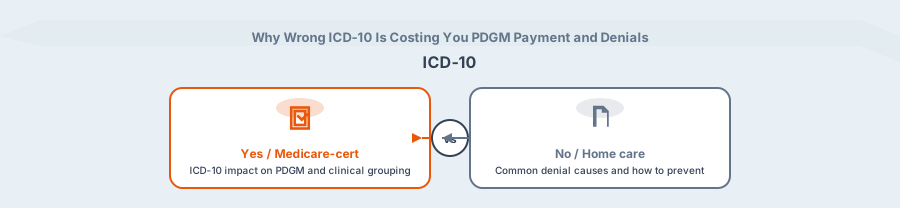
ICD-10 codes drive PDGM payment and clinical grouping. Wrong or missing codes mean wrong payment, ADRs, or home health billing denials. Senior management should ensure someone owns ICD-10 home health coding review at SOC and recert.
What drives payment and denials
Primary and secondary diagnoses must support the disciplines and services you’re billing. Codes must match the physician order and face-to-face. Inconsistency between OASIS, order, and visit notes is a common audit trigger. One unsupported code can put the whole claim at risk.
Who should review and when
At least one person (clinical or billing) should review diagnosis codes before OASIS lock and before recert submission. Check: do the codes align with the order and F2F? Do they support each discipline? Are there any codes that don’t support home health or the episode? Fix before you lock or submit.
Cost of getting it wrong
Takebacks and ADRs cost staff time and delay revenue. A short pre-lock and pre-recert coding checklist prevents most issues. We have an ICD-10 Coding Review Checklist you can download: what to check at SOC and recert, alignment with order and POC, and common pitfalls. Use the button below to get it.