
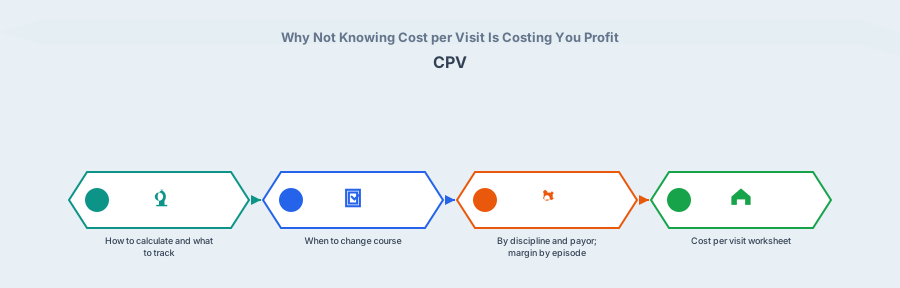
Cost per visit tells you whether you’re making or losing money on a visit. Average it across everything and you miss the story. Break it by payor and discipline and you see where the margin is,and where it isn’t.
How to calculate it
Total cost for the period (salaries, mileage, supplies, overhead allocated to visits) divided by total visits. That’s your average. Then slice it: Medicare vs. Medicare Advantage vs. Medicaid vs. other. Same for discipline,skilled nursing, PT, OT, SLP, MSW. Some agencies find that one payor or one discipline is barely breaking even or losing money. If you don’t slice, you won’t see it.
What to do with the number
Compare cost per visit to revenue per visit (or revenue per episode if you think in episodes). If a segment is negative or thin, you have choices: renegotiate rates, reduce cost (efficiency, not just pay cuts), or reduce volume in that segment and shift capacity to better-paying work. Ignoring it and hoping volume fixes it usually doesn’t.
Frequency and episode length
Visit frequency and episode length affect both cost and revenue. More visits per episode mean more cost; they also mean more revenue if you’re paid per visit. PDGM changed the game for Medicare,payment is tied to the episode and the clinical grouping, not just visit count. So “cost per visit” still matters for internal efficiency, but “profit per episode” matters for Medicare. Track both. We have a cost-per-visit worksheet you can download: template to break out by payor and discipline and compare to revenue.